

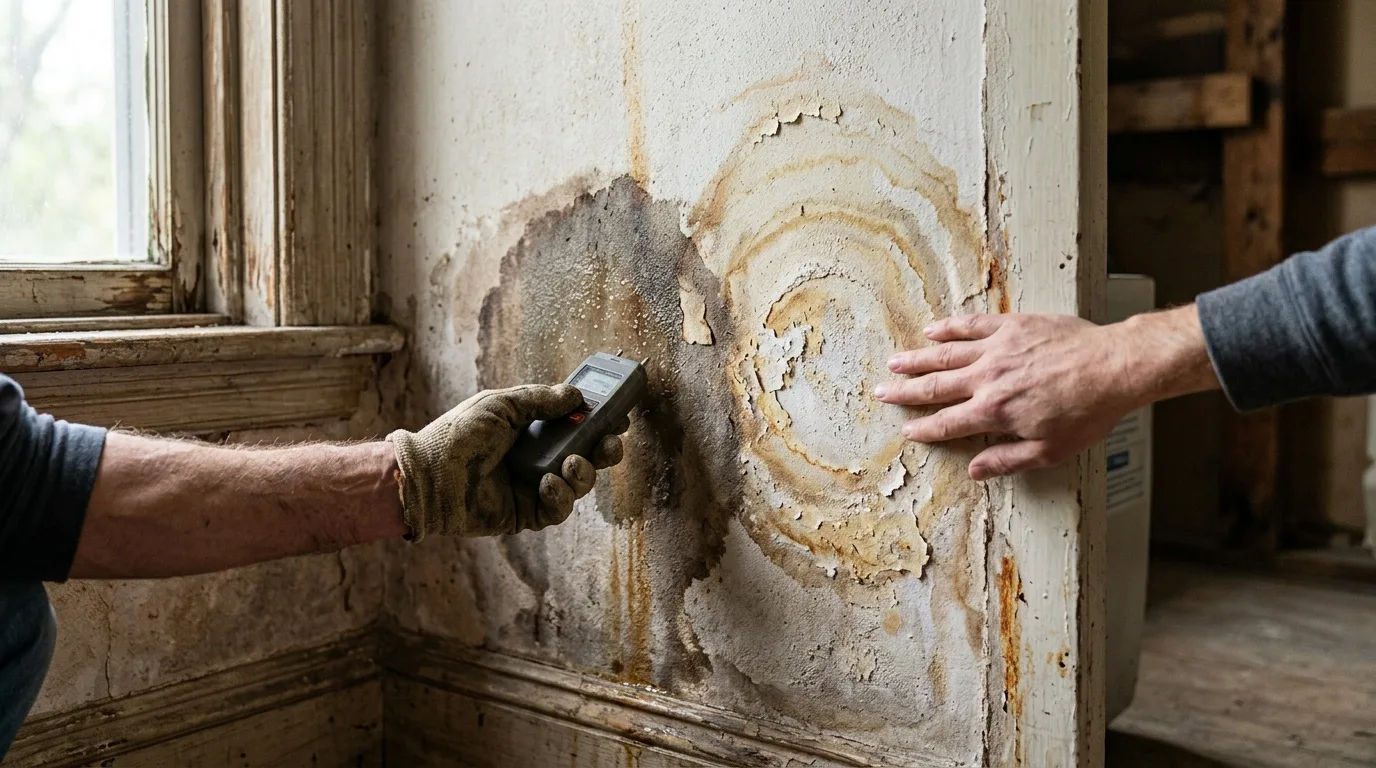
Moisture in a room is more than an unpleasant mark on a wall or a wet spot. Where the moisture shows up, when it appears and what it looks like can tell you which kind of cause you are most likely dealing with: a leak, condensation, poor ventilation or a problem with the walls and roof themselves.
The main rule is not to remove the result right away, but to find the source of the water first. If you just paint over the stain, dry the wall or wipe off mold without looking for the cause, the problem often comes back. A proper check starts with watching: where the moisture appeared, what it looks like, when it shows up and what changes nearby.
Homeowners in Escondido usually ask a second question as well: is this water damage old or new? That question matters for repairs and, often, for an insurance claim. Below is what can and cannot be read from a stain.
Can You Tell Exactly When Water Damage Happened?
Short answer: not to the day. A restoration pro or an adjuster can estimate a rough time frame from moisture readings, the materials and the kind of staining, but no method gives an exact date, and an insurer may send its own adjuster to look.
How to Tell a New Water Stain From an Old One
Initial assessment does not require special instruments. A few signs already narrow down the range of possible causes and help you judge an old vs new water stain on the ceiling.
- Location: the ceiling, a corner of the room, the area near a window, a spot next to pipes or the whole surface of a wall.
- Type of mark: a fresh wet spot, darkening of the material, white mineral deposits, a change in the color of the finish.
- Link to events: does the moisture appear after rain, after someone uses the bathroom, after cooking, or all the time.
- Rate of change: is the spot growing quickly or staying about the same.
- Accompanying signs: a damp smell, peeling finish, a coating or film on the surface, crumbling material.
It is important to judge not one sign but their combination. The same symptom can have several explanations.
Color and Depth of the Stain
Old stains are usually darker and are absorbed deeper into the surface. A recent stain is lighter and sits closer to the surface, which is also why it is easier to clean if you act fast. Dark, set-in rings on drywall are one of the most common old water stains on ceilings that homeowners find when they buy a house or open up a room.
Softness and Moisture
Look at the condition of the materials: changes in the finish, a damp smell, softening of the surface. A wet area can be smaller or larger than the zone that is actually wet inside the material. This matters especially for walls, ceilings and hidden assemblies, so a dry-looking surface does not prove the material behind it is dry.
Clean Water, Gray Water and Sewage
Water from a clean supply line, gray water from a washer or dishwasher and sewage are handled differently: sewage calls for a pro right away, and nobody should touch it bare-handed.
How Long Does It Take for Water Damage to Show?
Not all of it shows on the first day. Some marks fade as the material dries, and others get worse over the following weeks. Beyond the visible damage there are hidden consequences: damaged wiring, mold and fungus. When a pro inspects a flooded home, they look at both the visible and the hidden damage to walls, ceilings, floors, furniture and appliances.
New effects of a leak can also come out later, after the first inspection. In that case the adjuster can be asked to come back to look at the new damage. This is one more reason why a stain you see today does not always tell you how long ago the water got in.
Does Water Damage Eventually Go Away?
A stain can dry and fade, but that does not mean the damage is gone. Paint or a new finish hides the outward sign but does not remove the source of the water. If the cause is still there, the spot usually comes back.
A ceiling stain needs special attention, because the source of the water can be above the visible area. Possible reasons include:
- Failed seals: joints or building elements that no longer keep water out.
- Nearby utility lines: problems with plumbing or other lines running close by.
- How the room is used: moisture building up because of the way the space is lived in.
If a ceiling stain shows up again after drying, look for the reason it keeps getting wet. A simple cosmetic touch-up does not solve the problem in that case.
How to Tell if Water Damage Is Permanent
The longer a material stays wet, the higher the chance of damage to finishes and structures that are not designed for constant contact with water. A safe self-check should be about collecting information, not about complex repairs without understanding the cause.
- Find the borders of the problem. See whether the moisture is limited to a small area or spreads further.
- Track when it appears. Write down after which events the problem shows up: rain, water use, closed windows, a drop in temperature.
- Inspect the nearest water sources. Check the accessible areas near plumbing fixtures, windows and vents.
- Judge the condition of the materials. Note changes in the finish, a damp smell, softening of the surface.
- Compare after drying. If the spot comes back quickly, the source of moisture is probably still active.
Some signs mean the check should not be put off:
- Growth: the spot gets bigger or new wet areas appear.
- Breakdown: finish materials start to peel or fall apart.
- Wood and sensitive materials: the moisture comes with changes in wood or other materials that react to water.
- Hidden source: the water is coming from an area you cannot reach.
If there is a risk of a hidden leak or damage to the structure, further steps are better left to a pro. You can read about how water damage restoration work is done on our site.
How Long Until Mold Starts?
Mold can start on wet materials within 24 to 48 hours, so a room has to be dried right after a leak. Not everyone who has had a flood knows this, so some time after the visible traces are cleaned up, fungus and mold can form on walls, ceilings and other places. Several weeks or even months can pass between the leak and the moment the problem is found.
If you already see growth, our page on mold remediation for local homes explains the work, and this guide covers how to prevent mold after a plumbing leak.
Why the Age of the Damage Matters for Insurance
An insurer usually wants to know whether damage came from a sudden event or built up over a long time, and whether it happened within the period your policy covers. Since no method can date a leak precisely, the answer comes from the overall picture: the condition of the materials, the type of water, the records you kept and how fast you reported the problem. What a given policy pays for is a separate topic, covered in our article on what homeowners insurance covers for water damage. The California Department of Insurance consumer guides also explain how residential claims work.
Documenting the Damage
Whether you are dealing with an insurer, a neighbor or a landlord, the adjuster or inspector who assesses the damage will need more than a look at the room. Prepare the following:
- Any inspection report: a report on the leak from a plumber, an adjuster or the landlord, if there is one.
- Renovation records: the contract for earlier renovation work, invoices and other papers for building materials, if any.
- Purchase records: contracts, receipts and invoices for the damaged furniture, appliances or other property, if any.
- Photos: pictures of the rooms before and after the leak, if available.
During the inspection the adjuster records every damage found, photographs it, and only later works out the cost of fixing it. Keep any agreements and receipts for inspection and repair work. If new damage turns up later, the inspection can be repeated and the new damage added.
Cleaning an Old Stain Once the Source Is Fixed
Only after the cause is found and fixed should you move on to the stain itself. For a recent stain the main thing is to act fast. Mix equal parts white vinegar and water in a spray bottle, spray the stain without soaking it, wait 10-15 minutes, then gently wipe from the edges toward the center with a sponge or cloth. Repeat if needed, rinse with clean water and dry the area.
Old stains are darker and set deeper, so bleach is needed. Mix 1 part bleach with 3 parts water, lightly dampen the stain, wait 10-15 minutes, wipe, rinse and dry.
When working with bleach on a ceiling, put on protective gloves, goggles and a mask first, keep the room ventilated, and never mix bleach with vinegar, ammonia or other cleaners.
Painting a stain without cleaning it first is not a good idea - paint only masks the problem. After cleaning, seal the spot with a stain-blocking primer and repaint the area. If the stain is old, a full prime and repaint will most likely be needed. Before starting, cover the floor and furniture with plastic or a tarp, and do not scrub the stain too hard - that can make it worse. If the stain is large or keeps coming back, it is better to call a pro, because that can point to a more serious problem.
Before Any Repair Work
It helps to answer a few questions first: Why does moisture appear in this exact place? Does it happen all the time or only under certain conditions? Has the cause been fixed, or only the visible defect hidden? How will the result be checked after the repair? These questions help you avoid spending time and money on finishes while the main problem stays.
If you want to know who you would be working with, you can learn more about our team or read what local homeowners say. For more guides on water, fire and mold, see the other articles on our blog or start from our Escondido restoration home page.