

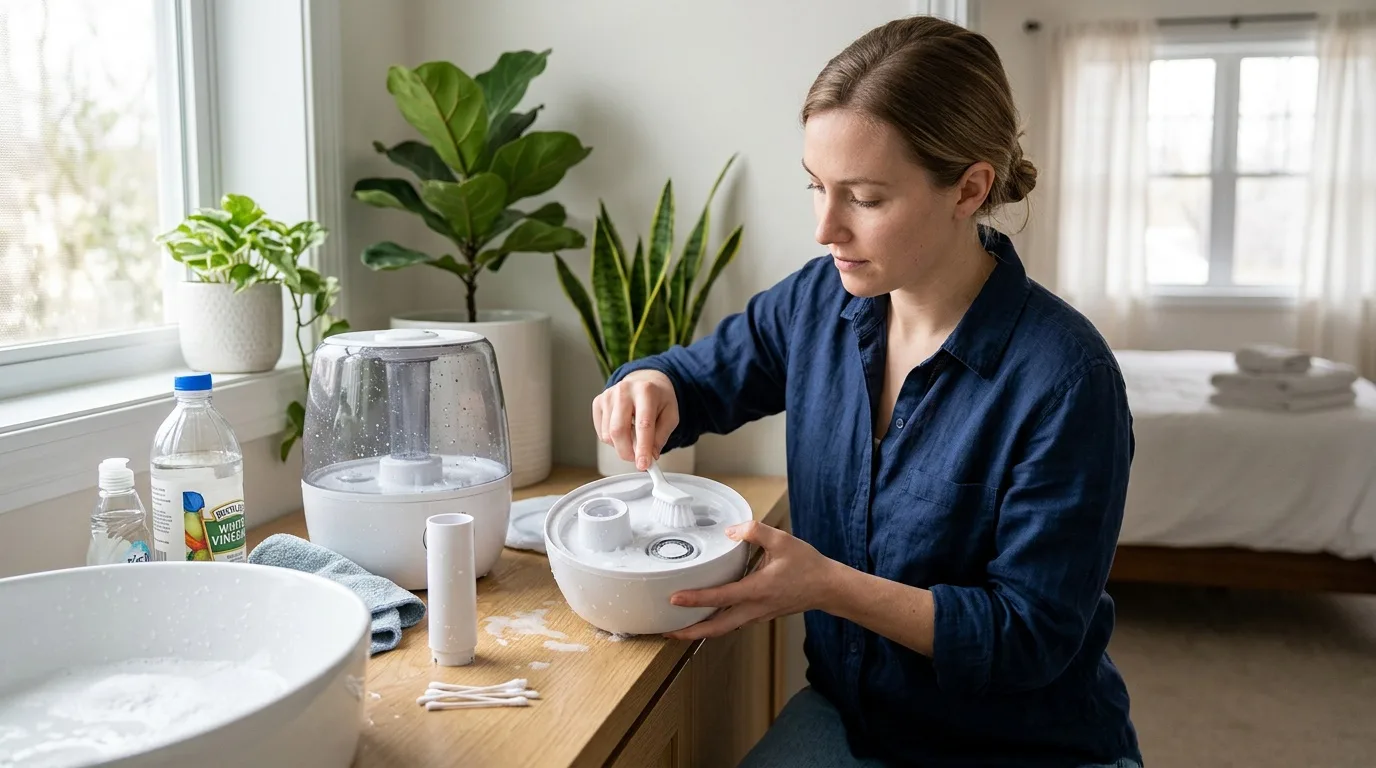
A humidifier can help with dry air. If nobody cleans it, though, it becomes a small tank of warm, still water, and that is where bacteria and mold do well. Dust and minerals from tap water settle inside and feed them. When the unit runs, some of what grows in the tank can reach the air you breathe. People with asthma or allergies usually notice it first.
This guide covers why mold grows in a humidifier, how to clean the tank and parts, which water to use, and how to tell when a humidifier is putting too much moisture into the house. That last part matters for homes in Escondido, where the air is dry most of the year and people tend to turn the humidifier up during Santa Ana weeks.
Why Humidifiers Grow Mold
Three things cause most humidifier mold:
- Standing water. Water left in the tank for days, or sitting in the base after the unit is switched off, gives mold and bacteria time to grow.
- Mineral deposits. Tap water has calcium and magnesium salts in it. When the water evaporates, those minerals stay on the tank, the base and the ultrasonic disc as white scale. The harder the water, the faster the scale builds, and that rough surface collects dirt and holds on to growth.
- Dust and dirt. Dust settles into the reservoir and onto filters. It gives microorganisms something to feed on.
Ultrasonic models have one more problem. They break water into a fine mist, and whatever is in the water goes into the room with it, including minerals. That is why a white film sometimes shows up on furniture near the unit.
Mold in a Humidifier: Symptoms to Watch For
Some signs that a humidifier needs cleaning now and should not wait for the next scheduled wash:
- A musty or sour smell when the unit runs, or when you open the tank.
- Slime, pink or dark spots in the tank, on the base or around the outlet.
- White crust or film on the parts, or white dust settling around the unit.
- Coughing, stuffiness or allergy flare-ups that seem worse in the room where the humidifier runs.
If you see any of these, clean the unit before you use it again.
Mold in a Humidifier: How to Clean It
Check the manufacturer's manual first. Steam, ultrasonic and evaporative models are built differently, and some parts should not be soaked. The steps below work for most portable units.
What You Will Need
- A cleaning solution: white vinegar mixed with water in equal parts, or citric acid dissolved in warm water. A commercial descaler works too, as long as it does not need hot water.
- Soft tools: a soft brush or sponge, an old toothbrush, cotton swabs and a lint-free or microfiber cloth.
- A towel to dry the parts on.
Skip abrasive powders and scouring pads. They scratch the plastic and the ultrasonic disc, and scratches give scale and mold more places to hold on.
Step by Step
- Unplug the unit. Do not clean a humidifier that is still connected to power.
- Take it apart and drain it. Empty the tank and the base. Remove the filter and any other parts that come off.
- Wash the tank. Rinse it with warm water and a little mild dish soap. Pay attention to the bottom, where most of the sludge collects.
- Add the cleaning solution. Pour it into the tank and the base. If they cannot be filled separately, fill the base first, then attach the tank and fill it.
- Let it sit. Give the solution about 30 to 60 minutes to loosen scale. Heavy buildup may need longer.
- Soak the small parts. Put the removable pieces in the same solution while you wait.
- Scrub gently. Use the soft brush on the tank and base. On steam models, clean the steam outlet with the toothbrush. Use cotton swabs for corners and small openings. Wipe the ultrasonic disc on ultrasonic units only with something soft.
- Rinse well. Drain the solution and rinse every part with clean water until there is no vinegar or cleaner smell left.
- Dry completely. Lay the parts on a towel and wipe them dry with the cloth. Put the unit back together only when everything is dry.
After any cleaner or disinfectant, rinse every part thoroughly before you refill the humidifier. Whatever is left in the tank will be put into the air the next time the unit runs.
Filters
Look at the filter each time you clean. Some filters can be rinsed under warm water or soaked in a cleaning solution and then rinsed. Others have to be replaced. The manual tells you which kind you have and how often it should be changed. A filter that smells or looks discolored after washing is due for replacement.
How Often to Clean
The EPA's recommendations for portable humidifiers are simple:
- Every day: empty the tank, wipe it dry and refill it with fresh water. Do not top up old water.
- Every third day: do the full cleaning described above.
- After cleaning: rinse well, as described in the warning above.
Clean it right away, whatever the schedule says, if you notice a smell or new white deposits. You can read the details in the EPA's guide to home humidifier care.
Which Water to Use
Most scale comes from tap water. The EPA recommends water that is low in minerals, such as distilled water. This matters most for ultrasonic and cool-mist units, which put minerals into the air along with the mist. Filtered or reverse-osmosis water is also lower in minerals than water straight from the tap.
Low-mineral water does not mean you can skip cleaning. It means less scale, and less scale means fewer places for mold to grow. You still need to change the water and clean the tank on schedule.
Humidifier Mold Prevention
- Never leave water sitting. Empty the tank when you are done with the unit, and let the parts air-dry somewhere with good airflow.
- Change the water every day. Fresh water, not water added to what is already there.
- Wipe dust off the outside of the unit and the area around it.
- Store it dry. Before putting the humidifier away for the season, clean it, take it apart and let every piece dry fully.
The Right Humidity: Don't Over-Humidify
A clean humidifier can still cause mold. The difference is where it grows: on the walls, windows and furniture instead of in the tank. Too much moisture in a room is just as much of a problem as a dirty unit. A common target is indoor humidity between 30 and 50 percent. A basic hygrometer is the easiest way to check what a room is actually at, rather than guessing.
Signs of Too Much Humidity
- Condensation on windows, mirrors or cold walls, especially in the morning.
- A musty smell in the room, not only from the unit.
- Damp spots on carpet, curtains, or the wall or furniture closest to the humidifier.
- Dark spots in corners, around window frames or behind furniture.
If you see these, turn the humidifier down or off and let the room dry out. Keep the unit away from walls and furniture so the mist does not land on them. Mold that has already shown up on walls or other materials needs more than a wipe-down. Our guide to preventing mold after a leak explains how moisture in a house turns into a mold problem.
Dry Santa Ana Weeks
When Santa Ana winds blow through Escondido, the air gets very dry, and it is natural to run the humidifier longer and on a higher setting. That is reasonable, but the same rules still apply. Check the humidity reading instead of going by how the air feels. Change the water every day even if the tank is not empty. Turn the unit down when the winds pass and the air goes back to normal, because a setting that was right during a dry spell can be too much a few days later.
When the Problem Is Bigger Than the Humidifier
A moldy tank is a cleaning job. Mold on drywall, under carpet or inside cabinets is a different kind of problem, and so is water that has soaked into floors or walls. If a humidifier, a leak or anything else has left mold or damp materials in your home, you can learn about our mold remediation services in Escondido and our water damage restoration work. When belongings have to come out of a room while it is cleaned and dried, our pack-out and contents services handle that part.
To learn more about us, read who we are and how we work, see what customers say in their reviews, or browse more home care articles on our blog. You can also go back to the restoration company home page.