

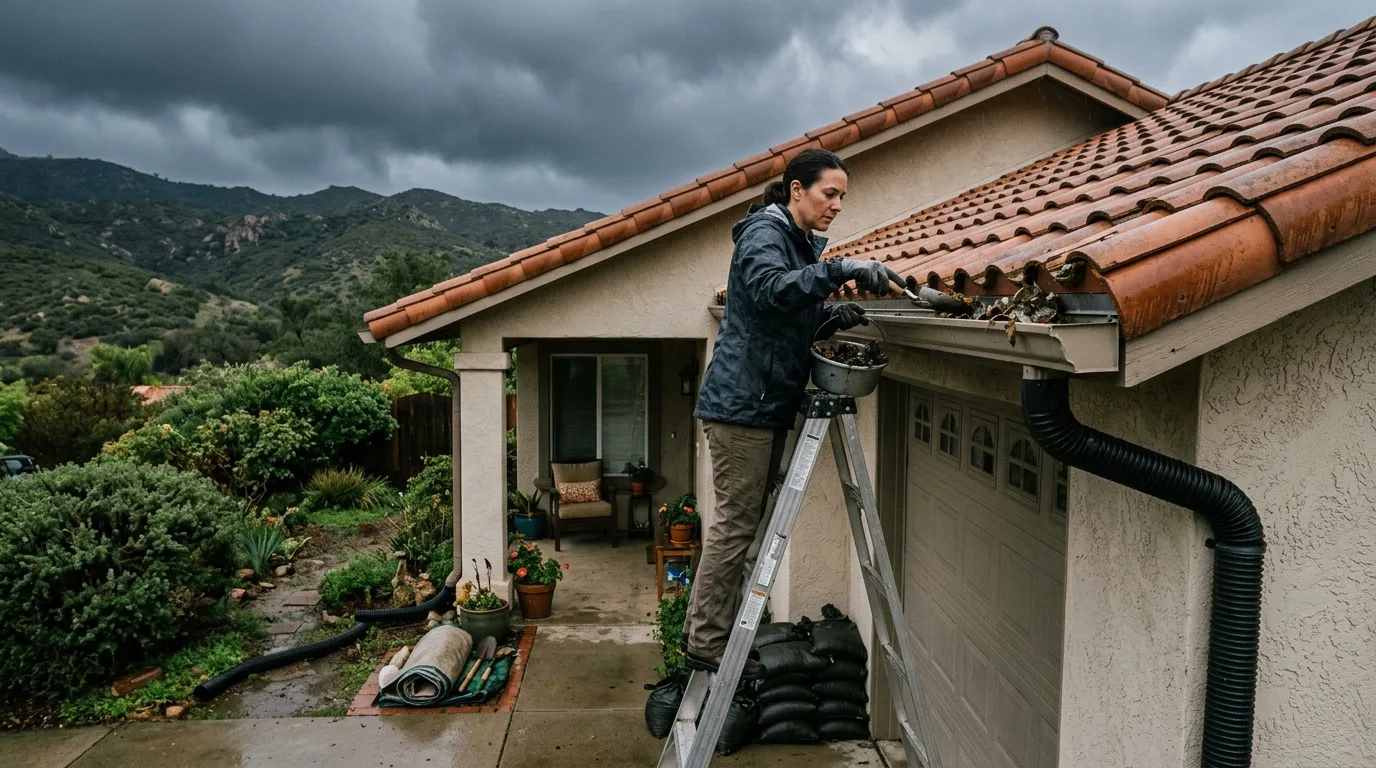
When an atmospheric river is coming to San Diego, a lot of water can fall on a house in a short time. One of the main reasons homes flood is clogged gutters and drainage. Clogged gutters can quickly lead to water collecting inside a house.
This is a working list of how to prepare a house for heavy rain in Escondido. It is better to go through it before the San Diego rainy season, not on the evening the first storm arrives. Some points take an hour with a ladder. Others need a contractor and a dry week.
It helps to split the work into three groups:
- Urgent: leaks, the roof, drainage, the foundation, electrical, gas.
- Preventive: gutter cleaning, treating wood, small repairs on the exterior walls.
- Improvements: patio covers, sheds, landscaping.
This order keeps the budget from being spread thin. First you fix what affects the condition of the house the most.
Gutters and downspouts
Start with the drainage from the roof. Check whether the gutters and downspouts are clogged, whether the slope of the gutter is still there, and where the water goes after it leaves the pipe. If water stands at the foundation or hits the lower part of the wall, it has to be carried further from the house.
Rain gutter cleaning is simple work, but it has to be done properly:
- Remove leaves, debris and dirt. Make sure the downspouts and the gutters along the roof are clean and actually carry water.
- Check the slope. Sometimes it is enough to clean the gutters, take out the debris and restore the slope.
- Install guards. To keep debris out, gutter guards or leaf traps can be installed.
Downspout extensions
A downspout that empties right next to the wall puts all the roof water at the foundation. A downspout extension, a splash block or a channel takes the water further from the house. Where water still collects, drainage is the next step (see below).
A roof check
Inspect the roof from the ground. Look for shifted shingles or panels, cracks, loose fasteners, debris in the valleys and along the eaves.
Then go up into the attic. There you look for:
- A damp smell. It often comes before any visible sign.
- Dark spots and streaks on the wood and the underside of the roof deck.
- Wet insulation. The lower layers of insulation in the attic should stay dry.
Waterproofing work on roofs and walls should be done before the peak of the rainy season. Prevention helps avoid leaks that can damage the structure and belongings.
Look at the exterior walls too. Cracks, peeling paint and bubbling often point to moisture. Local defects are dealt with at the start of the season: cleaned, dried, treated. If the problem comes back every year, the cause should be looked for in the drainage, behind the siding or in the roof.
Check wooden structures separately: patio covers, decks, fences, gazebos and sheds, especially posts and the places where they meet the ground. Soft, crumbling wood has to be replaced, not just painted. Load-bearing parts are better repaired without delay.
Drains and grading
Water from the roof and from paved areas has to leave the lot, not stay next to the house. There are several ways to do this.
- Storm drainage. A network of channels, pipes and catch basins carries water from roofs and hard surfaces off the property. Rainwater can also be collected in barrels for watering.
- A drainage trench. This is a trench filled with gravel with a perforated pipe at a depth of about 2 to 3 feet. It is laid in problem areas. Call 811 before any digging.
- Grading. The ground next to the house should slope away from the foundation. Low spots are filled and the soil is reshaped; larger grading needs equipment and a contractor.
- A rain garden. Plants that like water, shrubs and lawns soak up water and keep the soil from washing out and puddles from forming.
All of this works only if it is kept up. Drain inlets, catch basins and pipes need to be cleaned of debris and leaves regularly. Do it before the storm, not after the first one.
Door and garage thresholds
Water that runs along the ground finds the lowest opening. Usually it is a door or a garage.
- Seal the frames. Door and window frames are sealed with silicone, weatherstripping or water-resistant tape.
- Check the garage door seal. The rubber strip along the bottom of the garage door is the same weatherstripping and wears out the same way.
- Cover the openings. If water is rising, close windows and doors on the ground floor with boards where possible.
What to lift off the floor
In the places where flooding is possible, and on the lower floor first, raise things above the level of the ground and the floor:
- Appliances and electronics. Raise small appliances and electronics above floor level, especially in rooms that have taken on water before. Moving outlets is a job for a licensed electrician.
- Documents and valuables. Keep them on a high shelf, in a sealed waterproof bag.
- Everything that soaks up water. Rugs, boxes, furniture with fabric, things stored on the garage floor.
If belongings already got wet or the house needs work, items can be moved out with pack-out and contents storage services while it dries.
Power and documents
Have an electrician check outdoor outlets and connections. This lowers the risk of a short circuit and a fire.
Put together an emergency kit. It includes:
- A flashlight and a radio.
- A first aid kit.
- Drinking water and food that keeps for a long time.
- Personal documents in sealed waterproof bags.
It is useful to keep digital copies of IDs, insurance policies and property documents in the cloud or on a USB drive.
Follow the weather forecast. In San Diego County, AlertSanDiego, the county emergency alert system, lets you register cell phones for emergency alerts, and it advises keeping an evacuation go-kit ready. General flood advice is collected on Ready.gov's flood safety page.
If water starts rising suddenly, stay calm, quickly gather documents, valuables, medicine and food, turn off the electricity only if you are dry and not standing in water, and wait for help on an upper floor or a high place. Follow the instructions of emergency officials.
After the storm: checking for leaks
When the rain stops, go through the house again. Check the attic for the same signs: a damp smell, dark spots, streaks, wet insulation. Look at the ceilings, the walls under windows and the floor along exterior walls.
If water got inside:
- Ventilate. Open all doors and windows to get rid of the dampness and the smell.
- Dry. If needed, use fans and a dehumidifier to dry the rooms.
- Pump out standing water. Water is pumped out with a pump. It is better to use a universal pump that works with both clean and dirty water. Keep the power to the wet area off, and wear gloves and boots: floodwater can carry sewage.
- Remove swollen materials. Take out swollen drywall, flooring and wet insulation, and dry the framing.
If a house takes on water regularly, a sump pump is installed.
Wet drywall, flooring and insulation that stay damp are where mold starts. More on this is in our guide on preventing mold after a plumbing leak. When the water has gone further than a fan can handle, see how water damage restoration in Escondido works, and if growth has already appeared, read about mold remediation for Escondido homes.
You can learn who we are and how we work, read what homeowners say in reviews, or go back to the main page of the site. Other seasonal articles are in our news and tips section.