

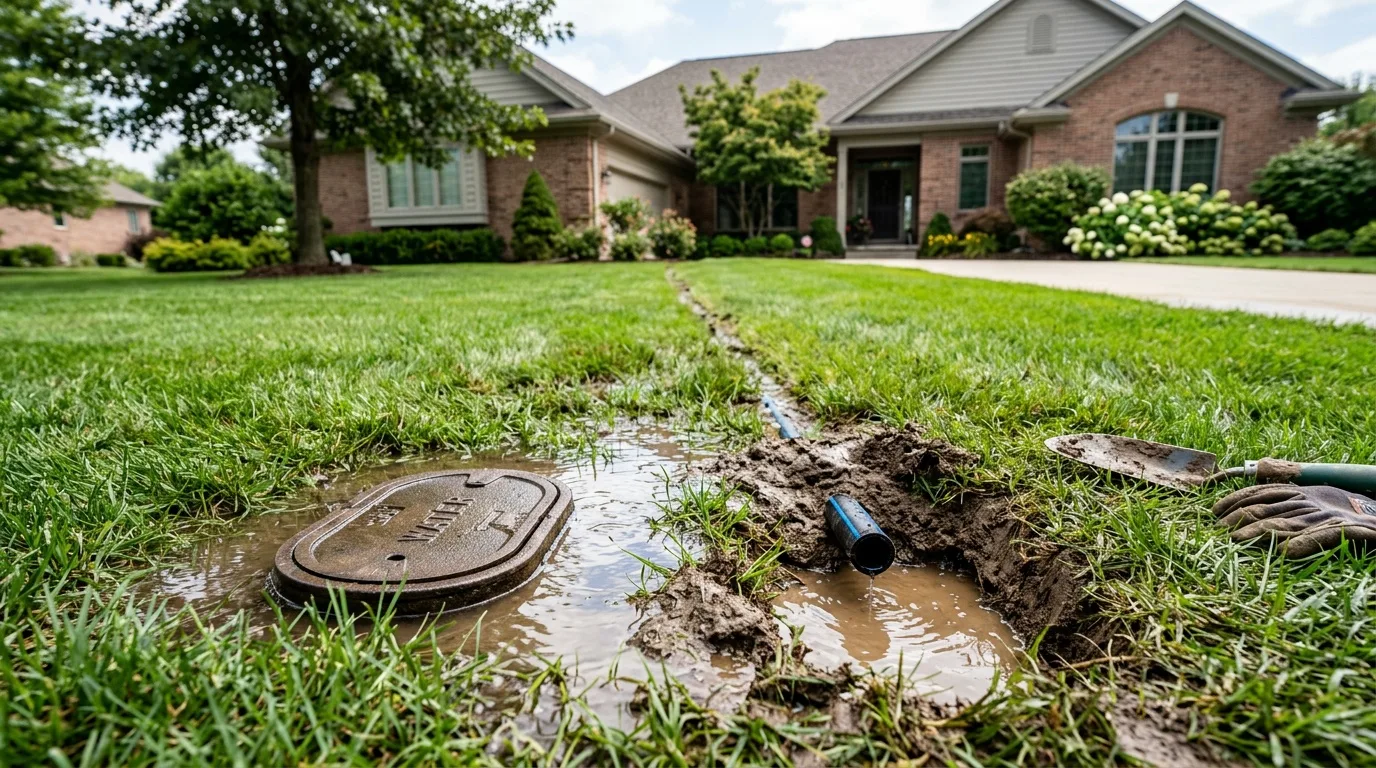
A water leak is any loss of water from the supply system other than through a tap: a faulty faucet, a cracked pipe, a flexible supply hose, a toilet tank, or a hidden section under a slab or under the ground. When the pipe that gives way is the one running from the meter to the house, the problem is harder. A break in a pipe buried under a layer of soil can go unnoticed for quite a long time, because the water does not come to the surface at the spot where the pipe failed.
The task is to notice the leak, find the exact place and fix it before a small drip turns into a flooded crawl space or a washed-out foundation. Below is what a water leak in the yard looks like, how to check for it quickly, whose pipe it usually is and what the repair options are.
Signs of a Water Leak in the Yard
You cannot always see a leak, but you can suspect one by indirect signs. Some of them show up outside, some inside the house.
Outside: the ground along the pipe
- Soggy ground. The soil is soaked in one place, or puddles and marshy spots appear on the lot when there has been no rain.
- A green patch in the dry season. One zone of the yard is noticeably greener and wetter than the ground next to it. This is a typical sign of a leak on the buried service line.
- Wet spots where the pipe runs. Damp strips appear along the route of the pipe from the meter to the house.
- Sinkholes. The ground settles, or an unexplained hole or depression appears on the lot.
- A hissing or running sound. You can hear water gurgling in the wall, under the floor or near the line with every tap closed. A musty, damp smell often comes with it.
Inside: pressure, the meter and the walls
- Low pressure. The pressure in the system drops and the flow at the tap is weak.
- Higher water use. Use on the meter has gone up noticeably with no change in habits. Compare the bills to see whether it is a leak or simply more laundry and more watering.
- A moving meter. The dial or the small star on the meter keeps turning when nobody is using water.
- Damp walls and floors. Wet spots and stains appear on walls, floors or ceilings, the paint peels, and finishes swell or come away.
- Mold. Fungus and mold spread suddenly, with no other obvious cause.
The Quick Test
The first and most reliable way to check whether there is a leak is to close all the taps and look at the meter. If the dial keeps turning, the water is going somewhere other than your fixtures. The EPA WaterSense leak-check guide describes it this way: read the water meter before and after a 2-hour period when no water is being used. Any change suggests a leak.
Before blaming the yard line, rule out the toilet. The same guide suggests putting a few drops of food coloring in the toilet tank. If the color shows up in the bowl within 10 minutes, the flapper is leaking.
If the meter turns even with nothing open, close the valves on separate branches one at a time: kitchen, bathrooms, irrigation, water heater. When the meter stops, you have found the direction to search in. If it keeps turning with the main shutoff at the house closed, the water is most likely leaving between the meter and the house.
Who Is Responsible for a Water Leak Between the Meter and the House?
With a water leak in the yard, the first question is who to call, and that depends on whose pipe it is. As a rule, the water utility looks after its main and the meter, and the owner looks after the line from the meter to the house. But where exactly the boundary runs is not the same everywhere, so ask your water department before anyone starts digging.
Before anyone digs, call 811 to have buried utility lines marked. Water damage inside the home is a separate question; how coverage usually works is explained in our guide to homeowners insurance and water damage.
How a Hidden Leak Is Found
If the meter shows water use but everything looks dry, the leak is hidden: under the floor, in a wall or under the ground. A leak in the pipe from the meter to the house can be found on your own. But you will need a shovel and patience. It is much simpler to turn to someone who has leak detection equipment. The choice of tool depends on many factors, so the condition of the pipe is usually checked first.
The one method you can try yourself is a section test: close branches with valves and watch the meter.
Methods that need equipment
- Acoustic listening. When a crack forms in a water pipe, water under high pressure escapes and makes an unusual noise. A leak on a metal line gives a high-frequency sound, and on a plastic line a low-frequency one. Sensitive microphones tuned to different frequencies pick up these sounds from the ground and point to the spot.
- Noise correlation. Two microphones are attached at two points of the line and send the noise to the device. A program processes the data from both and calculates the peak, which shows where the water is escaping.
- Tracer gas. A section of the pipe is filled with a safe gas, mostly a mix of 95% nitrogen and 5% hydrogen. Because hydrogen molecules are so small, the gas escapes through the crack and rises through the soil, even through asphalt and concrete. Sensors pick it up on the surface.
- Pressure test. The system is filled with water above its working pressure and held for a set time. A drop in pressure points to a hidden defect. On a long line, a section is sealed off at both ends and tested; if the pressure holds, there is no leak there, and if it falls, the search is going in the right direction. Then the plugs are moved along the pipe until the point is found.
- Thermal camera. It shows the temperature difference over a wet area of floor, wall or soil. It works when the pipe carries cold or hot water.
- Moisture meters. They confirm where the materials or the ground are actually wet.
Repair Options for a Water Line Leak in the Yard
Some leaks inside the house are simple: tighten or rewrap a threaded joint, replace a flexible supply hose whole instead of trying to patch it, put a new flapper in the toilet tank. A buried line is different. You will most likely need a plumber when:
- The service line has broken underground. This means excavation, then repairing or replacing the damaged section of pipe.
- The leak is under a slab or in a wall. Partial opening of the floor or wall will be needed.
- Leaks keep coming back in the same place. There may be a problem with pressure in the system (the pressure set higher than normal) or with water hammer.
Even when the joint is done correctly, a new section should not be buried right away. It should first be tested under pressure. If no leaks show up during that time, everything is joined reliably and the trench can be backfilled.
When Water Reaches the Foundation, Garage or Crawl Space
An underground leak does not stay in the yard. Water under the ground can travel along the pipe and wash a path for itself, and it often comes out where you do not expect it. Watch for these:
- A constantly damp crawl space. The crawl space or the area under the house stays wet, though it should be dry.
- Water in the garage. Damp slab edges or water seeping in where the line enters near the garage.
- Swollen finishes. Floor coverings swell, wall finishes bubble or peel near the side of the house where the line comes in.
- Mold and the smell of damp. Fungus spreads suddenly in lower rooms.
If water is pooling against the foundation or standing in the crawl space, close the main shutoff valve right away and keep away from any wet area where electrical wiring, outlets or equipment may be in the water.
Once the pipe is repaired, the wet materials still have to be dried out. That is the work of water damage restoration in Escondido. If damp has been sitting long enough for growth to appear, read about our mold remediation services. When belongings in a garage or lower rooms are in the way of drying, pack-out and contents services move them out and back. You can learn more about our restoration team and see what homeowners say in reviews.
Prevention: How Not to Miss a Leak in the Future
It is easier to prevent an accident than to deal with the consequences. What is worth doing:
- Leak protection at the main. Have a plumber install a system with a solenoid valve on the incoming line. When a sensor goes off, the water is shut off automatically.
- A regular meter check. Every few months, do a control test on the meter with all taps closed.
- New hoses. Check the flexible supply hoses on heavily used appliances, under the washing machine and the dishwasher, and replace worn ones.
- A plan of the pipes. Keep a drawing of where the lines run. When you look for a hidden leak, it saves hours of opening floors and digging at random.
A small leak seems like a trifle until a bill comes with far more than the usual use, or a wall gets damp. Regular meter checks, careful joints and timely replacement of worn hoses help prevent most of these problems. More articles on water, fire and mold are on the restoration news and tips page, and an overview of everything we handle is on the restoration company home page.